
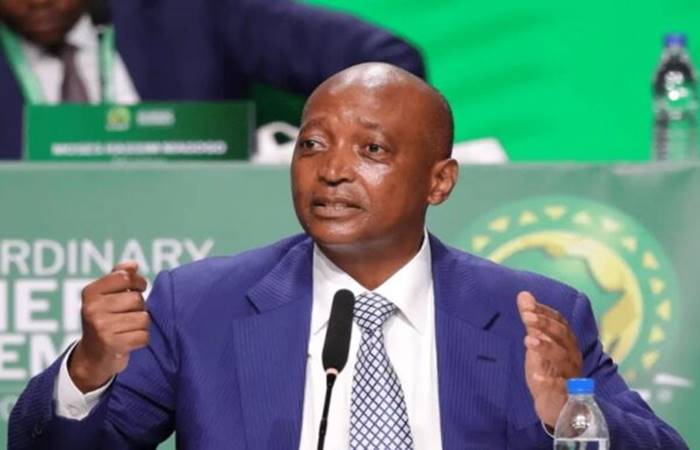
CAF Drops a Bombshell: AFCON Goes Quadrennial & A New Continental League is Born – The Full Breakdown.
The landscape of African football is being radically redrawn. In a historic press conference that’s sending shockwaves from Casablanca to Cape Town, Confederation of African Football (CAF) President Dr. Patrice Motsepe has confirmed a total overhaul of the continental calendar. This isn’t just a tweak; it’s a revolution designed to reshape the power, prestige, and economics of the game we love.
The headline-grabbing move? The iconic Africa Cup of Nations (AFCON) is officially shifting from its cherished two-year heartbeat to a four-year cycle, aligning with giants like the UEFA Euros and Copa América.
The New AFCON Rhythm: What You Need to Know
Forget what you knew. The familiar two-year AFCON feast is transitioning to a major quadrennial event. Here’s the phased rollout:
-
2025 & 2027: Proceed as planned. The 2025 finals are next, followed by the East African showcase in Kenya, Uganda, and Tanzania in 2027.
-
2028: The “Transition” Tournament. A unique, one-off AFCON will be held in 2028 (host TBA) to bridge the gap.
-
2032: The New Era Begins. From here, AFCON fully settles into its new four-year rhythm, making each edition a monumental, must-watch global event.
But why break with decades of tradition? Dr. Motsepe was clear: it’s about power, money, and respect.
The Real Reasons Behind the Shake-Up
-
Ending the “Club vs. Country” War: This is the biggest win for African stars in Europe. The perennial conflict with European clubs over player release for the biannual AFCON has caused endless friction. A four-year cycle, coupled with matches in standardized FIFA windows, is a peace treaty designed to protect our players’ careers abroad.
-
The Cash Factor: AFCON currently funds about 80% of CAF’s entire revenue. By making it rarer, CAF aims to skyrocket its commercial value. Broadcast deals, sponsorships, and prestige are expected to balloon. The prize money is already climbing—winners in 2025 get $10 million, up from $7 million—and this is just the start.
-
A Global Statement: As Motsepe stated, this is about building a “sustainable and globally competitive ecosystem.” A four-year AFCON demands global attention on par with other continental championships, elevating Africa’s standing on the world stage.
Meet the New Boss: The African Nations League
Just as seismic as the AFCON change is the introduction of a brand new competition: the African Nations League, kicking off in 2029.
Think of it as a consistent continental showdown to fill the gaps between the new AFCON cycles. Here’s the blueprint:
-
Who’s In? All 54 CAF nations.
-
The Format: Teams will be divided into four regional zones, ensuring fiery local derbies and reduced travel.
-
The Schedule: Matches will be played annually during the September, October, and November FIFA international windows.
-
The Climax: Each season will conclude with a finals phase, guaranteeing high-stakes football every single year.
This league promises more meaningful games for every national team, from Nigeria and Egypt to Lesotho and São Tomé, creating a constant narrative and development pathway.
ALSO READ: CAF President Unveils Historic $10m Prize Money for AFCON 2025 in Morocco
The Verdict: Praise, Questions, and the Road Ahead
The reform has heavyweight backing. Legends and administrators like Samuel Eto’o (Cameroon FA) and Hany Abo Rida (Egyptian FA) have publicly endorsed the vision for modernization.
However, major questions still hang in the air:
-
How will qualification for the new AFCON and the World Cup integrate with the Nations League?
-
What becomes of beloved regional tournaments like COSAFA and the African Nations Championship (CHAN)?
-
Will the increased gap between AFCON tournaments diminish its cultural resonance and momentum?
One thing is certain: the Motsepe-led CAF is betting big. This is a bold play to take control of African football’s destiny—its schedule, its value, and its global reputation. The beautiful game on the continent will never be the same.


 Leaked BBNaija Isabella Sextape and Nude Videos (FULL VIDEOS)
  Trending Leaked Sextape of Hausa Girl Halima Shehu and Boyfriend (FULL VIDEO)
  Musa Keys, Konke & Divine Vee – Siya Pusha
  Kamo 9ine, Leemckrazy & Prince Kaybee – Zwakala
  Nodoli Nelle – Written In The Stars ft. Dj Odyccy
  Lekker Stylist ft. Henny C, XamaCcombo, Khanyie & Salani The Producer – Huma Ka Mina (Mlakalaka)
  XDuppy ft. Mr Pilato & Ego Slimflow – Ba Nnyatsa
  Tiktoker Cindy Of Oshodi Sextape And Leaked 3Sum Videos (FULL VIDEOS)