
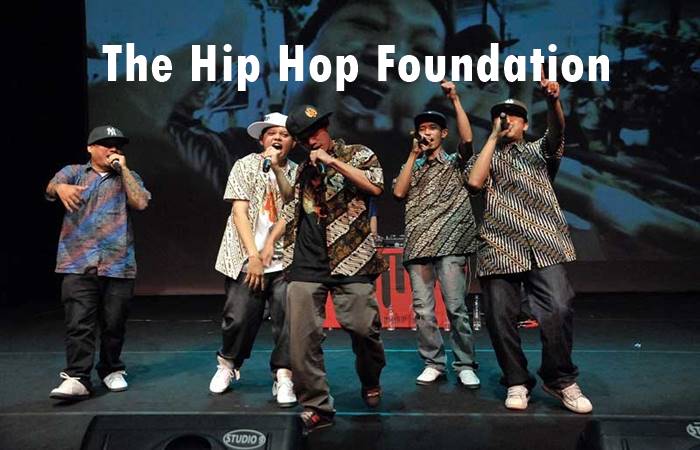
Sampling History: The Origins and Ethics of Hip Hop’s Foundational Art.
The very essence of hip hop—its rhythm, its nostalgia, its collage of sound—is built upon a practice both revolutionary and contentious: sampling. More than a mere production technique, sampling is the art of excavating, recontextualizing, and reanimating fragments of pre-existing recordings to create something entirely new. It is the thread that connects the block parties of the 1970s Bronx to the global digital studios of today, a story of technological innovation, artistic rebellion, cultural dialogue, and relentless legal and ethical debate. To understand sampling is to understand hip hop’s journey from the margins to the mainstream, its creative soul, and its ongoing struggle for artistic legitimacy.
The Origins: Birth of a Loophole (1970s – Early 1980s)
The genesis of sampling was not an artistic choice born in a vacuum; it was a creative necessity forged from limitation. In the socio-economically devastated South Bronx of the 1970s, the pioneers of hip hop did not have access to traditional instruments or formal music training. What they had were turntables, a handful of records (often their parents’ discarded funk, soul, and disco LPs), and monumental creativity.
The founding father of this approach was Kool Herc. His innovation wasn’t to play a record from start to finish, but to isolate and extend the most rhythmic, dance-friendly sections—the “breaks.” Using two copies of the same record on twin turntables, he would loop the break indefinitely, creating a continuous, hypnotic rhythmic bed for MCs to rhyme over. This “breakbeat” practice was the philosophical and practical precursor to sampling: it valued a recorded fragment over the whole, prioritizing groove and function over original composition.
The technological catalyst arrived with the E-mu Emulator and, more pivotally, the Akai MPC series in the mid-1980s. The MPC, especially, became the sampler of choice for legends like J Dilla, Pete Rock, and DJ Premier. It was more than a machine; it was an instrument. With its tactile pads and intuitive sequencing, it allowed producers to chop a breakbeat into individual hits—a kick, a snare, a hi-hat—and reprogram them into entirely new, often more complex, rhythmic patterns. This shifted sampling from mere looping to recomposition. The breakbeat from The Winstons’ “Amen, Brother” or James Brown’s “Funky Drummer” became raw clay, molded into the bedrock of countless hip hop classics.
This era operated in a legal gray area. Sampling was seen as an underground, non-commercial folk art. Records were cleared through a mix of obscure sources, sheer obscurity, or outright omission. The ethos was “digging in the crates”—a producer’s merit was tied to their dedication to unearthing forgotten gems, creating a tangible link to musical history and asserting a form of cultural scholarship.
The Legal Reckoning: The Golden Age Under Siege (Late 1980s – 1990s)
As hip hop exploded commercially, its foundational practice collided head-on with copyright law. The legal system struggled to categorize sampling: was it theft, fair use, or a new form of musical quotation?
The landscape changed irrevocably with two landmark cases:
-
Grand Upright Music, Ltd. v. Warner Bros. Records Inc. (1991): Biz Markie’s use of a Gilbert O’Sullivan sample on “Alone Again” led to a stark, famous ruling: “Thou shalt not steal.” This case established a zero-tolerance precedent. Sampling without prior clearance was now definitively copyright infringement. It sent panic through the industry, leading labels to institute strict “sample clearance” departments.
-
Bridgeport Music, Inc. v. Dimension Films (2005): This Sixth Circuit ruling went even further, declaring that any unauthorized sampling, no matter how short or unrecognizable, constituted infringement. The court’s infamous logic: “Get a license or do not sample.” This “de minimis” dismissal stifled creativity, making it legally perilous to use even a two-note fragment without costly clearance.
The consequences were profound. The “Golden Age” of hip hop (late 80s to early 90s), characterized by dense, multi-layered sample collages from artists like De La Soul, The Beastie Boys, and Public Enemy, became financially impossible to produce. Albums like De La Soul’s “3 Feet High and Rising” (which used dozens of uncleared samples) became legal quagmires, trapped in release limbo for decades. Production shifted toward:
-
Replaying/Interpolation: Hiring session musicians to re-record a melody or groove, requiring only a cheaper “compositional” license.
-
Original Composition: A move toward synthesizers and live instrumentation.
-
Cleared, Simpler Samples: A focus on one or two legally-cleared, often expensive, iconic loops.
The artistic result was a dilution of hip hop’s archival, referential texture. The legal message was clear: the culture’s foundational art form was, in the eyes of the law, inherently suspect.
The Ethical Dimension: Theft vs. Tribute
Beyond courtrooms, a fierce ethical debate persists. Critics, often from outside the culture, decry sampling as lazy theft, a parasitic practice that robs original artists of compensation and credit.
Hip hop artists and advocates counter with a more nuanced view:
-
Transformation & Recontextualization: A great producer doesn’t just take; they transform. They might slow down a soul vocal to create melancholy, isolate a obscure horn stab for tension, or chop a break beyond recognition to forge a new rhythm. The new creation has a different meaning, feel, and purpose.
-
Cultural Preservation & Dialogue: Sampling acts as a living archive. It resurrects forgotten artists (like Lyn Collins or Bob James) for new generations, often leading to revived interest and royalties. It creates a continuous conversation across generations and genres.
-
The Producer as Curator & Scholar: The act of “digging in the crates” is research. The producer’s skill lies in selection, juxtaposition, and meaning-making, much like a film director or collage artist.
-
The Issue of Equity: Many early sampled works were by Black artists who received unfair industry deals. While they deserve compensation, the complex system often sees most settlement money going to record labels and publishers, not the original artists. The ethical demand is for a fair and streamlined system that rewards both past and present creators.
The Modern Landscape: Neo-Sampling and New Frontiers (2000s – Present)
Today, sampling thrives in evolved, often paradoxical forms.
-
The “Looping” Renaissance: Producers like Madlib, Kanye West (in his early work), and The Alchemist have brought back the aesthetic of the recognizable loop, using it as a foundational mood. They navigate the complex clearance world with larger budgets or strategic obscurity.
-
Digital Democratization & Micro-Sampling: Software like Ableton Live and Splice has democratized sampling. “Micro-sampling”—using extremely short, often pitch-shifted fragments—allows for transformation that skirts recognizability but not necessarily legality, per the Bridgeport ruling.
-
The “Type Beat” & Generic Samples: A vast online economy sells pre-cleared, generic sample loops and “type beats,” sometimes leading to homogenization but also providing an accessible, legal entry point.
-
New Legal Models: Services like Tracklib offer a Spotify-like library of fully clearable songs, streamlining the process. Some artists, like Taylor Swift, have embraced being sampled, seeing it as flattering and culturally relevant.
The frontier now extends to AI-powered stem separation and sound generation, posing new questions: Is sampling an AI-trained model on a genre’s history ethical? Can you “sample” a style itself?
Conclusion: An Unfinished Symphony
The history of hip hop sampling is an unfinished symphony of innovation battling regulation, of reverence clashing with robbery. It began as a street-level solution and grew into one of the most influential artistic techniques of the 20th century. While legal battles have forced it into new shapes, they have never extinguished its core power: the ability to weave a tapestry of shared sonic history, to speak to the present through the voices of the past, and to assert that creativity is often a conversation, not a monologue. The ethics remain contested, but the art form endures, constantly evolving, reminding us that in the right hands, a fragment of the past can become the heartbeat of the future. The sample is not just a sound; it is a bridge, a citation, and a claim to a cultural legacy that the law is still learning to hear.


 Leaked BBNaija Isabella Sextape and Nude Videos (FULL VIDEOS)
  Trending Leaked Sextape of Hausa Girl Halima Shehu and Boyfriend (FULL VIDEO)
  Musa Keys, Konke & Divine Vee – Siya Pusha
  Kamo 9ine, Leemckrazy & Prince Kaybee – Zwakala
  Nodoli Nelle – Written In The Stars ft. Dj Odyccy
  Lekker Stylist ft. Henny C, XamaCcombo, Khanyie & Salani The Producer – Huma Ka Mina (Mlakalaka)
  XDuppy ft. Mr Pilato & Ego Slimflow – Ba Nnyatsa
  Tiktoker Cindy Of Oshodi Sextape And Leaked 3Sum Videos (FULL VIDEOS)